
Galapagos Sea Lions vs Fur Sea Lions Exploring Traits Habitats and Conservation

A dark shape rolls through the surf beside a lava rock, then a whiskered face pops up and stares back with bright, curious eyes. In the Galapagos Islands, that moment could belong to one of two closely related marine mammals: the Galapagos sea lion or the Galapagos fur seal, often casually called a fur sea lion.
Both are otariids, the family of “eared seals” that includes sea lions and fur seals. They have visible ear flaps, strong front flippers, and the ability to move on land far more easily than true seals. Yet once you know what to look for, the two Galapagos species are surprisingly different.
One lounges openly on beaches and docks. The other hides in cool, shaded lava crevices. One looks sleek and doglike. The other appears stockier, with dense fur and large eyes made for night hunting. Together, they show how two similar animals can share the same islands while living very different lives.
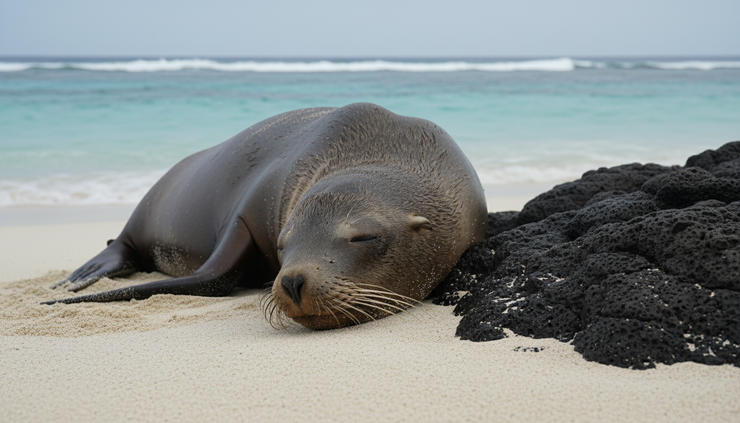
Two eared seals share the islands but live different lives
The Galapagos sea lion and the Galapagos fur seal both belong to the same broad marine mammal group, but they are not simply large and small versions of the same animal.
The Galapagos sea lion is the more familiar species. It is common around many visitor sites, harbors, beaches, and rocky shores. Travelers often see sea lions sleeping on benches, swimming near piers, or nursing pups on sandy beaches. They are active, vocal, and hard to miss.
The Galapagos fur seal is more secretive. Despite the name, it is not a true seal. It is a fur seal, an eared seal with thick underfur. Fur seals tend to rest in rocky, shaded coastal areas rather than open beaches. They are often seen around lava boulders, sea caves, and ledges where cooler air and shade help them avoid overheating.
Their difference starts with where each animal feels comfortable.
Galapagos sea lions are better suited to open, exposed coastlines. They often rest in groups close to the water, where females can nurse pups and adults can quickly escape into the sea.
Galapagos fur seals prefer rugged shorelines. Many rest during the day in the shade of rocks and forage at night. Their behavior makes them harder to spot, even in places where they are present.
A quick comparison helps show the main differences.
Feature | Galapagos sea lion | Galapagos fur seal |
Scientific name | Zalophus wollebaeki | Arctocephalus galapagoensis |
General build | Sleek, strong, longer-bodied | Smaller, stockier, very dense fur |
Common resting sites | Beaches, docks, gentle rocky shores | Shaded lava rocks, crevices, sea caves |
Activity pattern | Often active by day | More active at night |
Social style | Open colonies with loud interactions | Smaller groups in rocky areas |
Feeding focus | Fish and squid, often near shore | Small fish and squid, often at night |
This split in lifestyle reduces competition. Both animals need fish, safe resting spots, and places to raise pups, but they use the coastline in different ways.
Their bodies reveal where and how they live
At first glance, both species have streamlined bodies, pointed whiskered faces, and flippers built for swimming. Look closer, and their bodies tell two different stories.
Galapagos sea lions are sleek and social swimmers
Galapagos sea lions usually look smoother and more athletic. Adults have a streamlined shape, and males grow much larger than females. Mature males often develop a heavier neck and chest, giving them a powerful, bulky front end. Females are smaller, more graceful, and often lighter in build.
Their coat is short compared with that of a fur seal. When wet, it can look dark brown or grayish. When dry, it may appear lighter, sometimes tan or golden brown. Pups are usually darker at birth, then lighten as they grow.
Their flippers help them move with agility in the water and surprising ease on land. Unlike true seals, they can rotate their hind flippers forward, which allows them to walk, climb, and shuffle across rocks or sand.
Their faces often look expressive. Large eyes, flexible whiskers, and a doglike head give them the approachable look that makes them one of the most beloved animals in the archipelago.
Galapagos fur seals are smaller with thicker coats
Galapagos fur seals are generally smaller than Galapagos sea lions. Their bodies look more compact, and their heads can seem broader and shorter. They have large eyes, which suit their habit of hunting in low light or darkness.
Their defining feature is their fur. Fur seals have a dense undercoat that once made them a target for hunters. This thick coat traps air and helps with insulation, but it also creates a challenge in the equatorial Galapagos climate. Heat can build up quickly when they rest on land.
That is one reason fur seals favor shade. Their preferred lava crevices and rocky shelters are not just hiding places. They are cooling zones.
From a distance, a fur seal may look like a small sea lion tucked into the rocks. The best clues are the thicker-looking coat, smaller size, larger eyes, and choice of resting habitat.

Behavior and social life differ from beach to lava ledge
The two species do not just look different. They also organize their daily lives in distinct ways.
Galapagos sea lions form lively coastal colonies
Galapagos sea lion colonies are noisy, active, and full of movement. Pups call for mothers. Territorial males bark and patrol. Females rest, nurse, and enter the water to feed. Young sea lions play in the shallows and often seem as curious about swimmers as swimmers are about them.
Breeding areas can include sandy beaches, protected coves, and flat rocks near the sea. During breeding periods, adult males compete for access to territories where females gather. A dominant male may guard a section of beach or shoreline, trying to keep rivals away.
This guarding takes energy. Males may spend long periods patrolling and calling rather than feeding. As a result, holding a territory can be physically demanding.
Females provide the main parental care. They nurse pups on land and leave to forage at sea. When they return, mother and pup recognize each other by calls and smell. This bond matters in crowded colonies, where many pups may gather close together.
Young sea lions spend a lot of time practicing the skills they will need as adults. Play fighting, chasing, diving, and exploring tide pools all build strength and coordination.
Galapagos fur seals keep a lower profile
Galapagos fur seals tend to be less visible and less boisterous. They often rest in smaller groups among rocks, where shade and narrow spaces shape their behavior. Their colonies can still be active, especially during breeding periods, but the setting feels different from an open sea lion beach.
Males can be territorial, and breeding areas may form around rocky sections where females come ashore to give birth and nurse. Females also leave pups while they forage, then return to nurse them.
Fur seal pups face a different nursery environment. Instead of open sand, they often grow up around rough lava rock, pools, and crevices. These areas give shelter, but they can also be difficult to move through.
The more nocturnal rhythm of fur seals sets them apart. They often spend daylight hours resting in cool places and become more active as evening approaches. Their large eyes help them locate prey in darker water, and their feeding behavior is closely tied to night conditions.
Both species depend on sound and scent
For both animals, social life depends on recognition. Colonies can be crowded, and mothers must find their own pups after feeding trips. Vocal calls help, but scent also plays a key role at close range.
This is one reason human disturbance can be harmful. If people approach too closely, block a mother’s path, or cause a pup to move away from its resting site, they can disrupt important routines. The animals may seem relaxed, but they still need space.
Feeding habits show two strategies for survival
Food in the Galapagos does not stay constant. Ocean conditions shift with currents, seasons, and climate events. Sea lions and fur seals both feed on marine prey, but they use different strategies.
Galapagos sea lions tend to feed on fish and squid. They may hunt alone or in loose groups, depending on prey and conditions. Some forage close to shore, while others travel farther. Their flexible feeding style helps them respond to changing food availability.
They are fast, agile swimmers. Sea lions use their front flippers like wings, steering with power and precision. In shallow water, they can twist through rocky areas and chase fish with quick bursts of speed.
Galapagos fur seals also eat fish and squid, but they are more strongly linked to night feeding. They often forage after dark, when certain prey move closer to the surface. Their large eyes and sensitive whiskers help them hunt in dim light.
This difference in feeding time reduces direct competition between the two species. Sea lions are often more visible during the day, while fur seals may do much of their hunting when the coastline is quiet.
The Galapagos coastline works like a shared pantry. Sea lions and fur seals use many of the same ingredients, but they shop at different hours and rest in different rooms.
El Niño events can cause serious stress for both species. During these warm-water periods, prey may become scarcer or move deeper. Nursing females may struggle to find enough food, and pups can be especially vulnerable. Fur seals, with their cooler-water feeding patterns and heat-sensitive bodies, can be strongly affected by these changes.

Habitats and conservation efforts shape their future
The Galapagos Islands are famous for wildlife that evolved in isolation, but isolation no longer protects these animals on its own. Sea lions and fur seals face pressure from climate change, disease, marine debris, fishing interactions, and disturbance from people.
Where Galapagos sea lions are most at home
Galapagos sea lions use a wide range of coastal habitats. They rest on sandy beaches, rocky points, mangrove edges, docks, and even town waterfronts. This flexibility helps them survive, but it also brings them into regular contact with people.
In places where sea lions share space with boats or visitors, they may become tangled in fishing line, ingest plastic, or suffer injuries from propellers. Pups resting near busy areas can be disturbed if people ignore distance guidelines.
Their openness makes them easier to observe, but also easier to disturb.
Where Galapagos fur seals find refuge
Galapagos fur seals depend more on cool, shaded, rocky habitat. Lava ledges, boulder fields, grottos, and sea caves give them places to rest without overheating. These areas can be limited, which makes suitable habitat especially valuable.
Because fur seals are less visible, their needs can be overlooked by casual observers. Protecting rocky resting sites matters as much as protecting sandy beaches.
Their history also matters. Galapagos fur seals were heavily hunted in the past for their pelts. Legal protection helped the species recover, but their population remains vulnerable to food shortages and climate stress.
Protection in the Galapagos is built around habitat and behavior
Several conservation measures help protect both species:
Protected areas
The Galapagos National Park and the Galapagos Marine Reserve protect key land and ocean habitats. These protections help safeguard breeding areas, resting sites, and feeding grounds.
Visitor rules
Guides and park rules require people to keep a respectful distance from wildlife. This reduces stress, prevents accidental separation of mothers and pups, and limits risky close contact.
Fishing management
Controls on fishing activities help reduce pressure on marine ecosystems. They also lower the risk of entanglement and competition for prey.
Monitoring and research
Scientists and park authorities track population trends, pup survival, disease concerns, and the effects of ocean warming. Long-term monitoring helps conservation teams respond when conditions change.
Rescue and response work
When animals become entangled in line or marine debris, trained teams may intervene. These efforts are especially important in areas where wildlife and human activity overlap.
Education
Tour guides, naturalists, and local programs help residents and visitors understand why distance matters. A calm animal is not an invitation to approach.
The best conservation work respects how each species lives. A plan that protects only open beaches would miss many fur seal sites. A plan that focuses only on remote rocks would miss the sea lions resting beside harbors and town beaches.

What these two species teach about Galapagos biodiversity
The Galapagos sea lion and the Galapagos fur seal share ancestry, islands, and ocean currents, but they have taken different paths. One thrives in open social colonies, often in plain view. The other keeps to shaded rocks and hunts mostly at night. One is sleek and bold. The other is compact, thick-furred, and more elusive.
Those differences are not small details. They are survival strategies.
Seeing both species adds depth to any understanding of the islands. The Galapagos are not remarkable only because unusual animals live there. They are remarkable because closely related species have found precise ways to divide space, time, food, and shelter.
Protecting them means protecting beaches, lava shores, fish populations, quiet nursery areas, and the ocean conditions that sustain them. It also means giving wildlife room to behave naturally.
A sea lion sleeping on a dock and a fur seal tucked into a lava crevice may seem like simple island scenes. They are also signs of a living system that still works, and one that deserves careful attention.


Comments