
Galapagos Sea Lions vs Fur Sea Lions: Key Differences, Habits, and Conservation

A sea lion naps across a wooden bench in the Galapagos, whiskers twitching, flippers loose, completely unbothered by passing feet. A few miles away, in the shadow of black lava cliffs, a smaller, shyer animal slips through cool surf and vanishes into a rocky crevice. Both belong to the same remarkable island world, but they live very different lives.
The Galapagos Islands are home to two closely related marine mammals: the Galapagos sea lion and the Galapagos fur seal, often casually called a fur sea lion because of its sea lion-like shape and behavior. Both are otariids, the family known as eared seals, which means they have visible ear flaps and can rotate their rear flippers to move on land.
Yet side by side, they are easy to tell apart. One is bold, social, and often seen sprawled on beaches and docks. The other is smaller, thick-furred, nocturnal, and more often found around wave-cut lava ledges. Understanding their differences opens a window into how life adapts on isolated islands.

The two island relatives look alike until they do not
At first glance, both animals have torpedo-shaped bodies, large eyes, long whiskers, and a way of moving on land that looks both awkward and oddly elegant. Watch longer, and the differences start to sharpen.
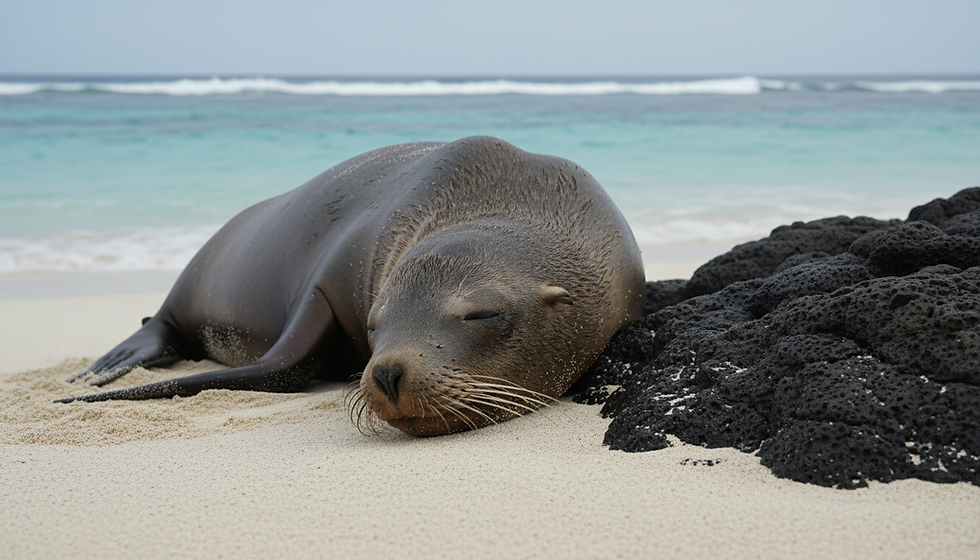
The Galapagos sea lion is the more familiar beach dweller. It has a smooth coat, a blunt face, and a doglike expression that seems to shift from drowsy to curious in seconds. Adult males grow much larger than females and develop a thick neck and raised forehead. A mature male on a beach can look like a living boulder, dark, scarred, and watchful.
Females are sleeker and lighter, often tan or golden brown when dry. Pups are darker at birth and spend their early weeks bleating for their mothers with a call that can sound surprisingly urgent, even dramatic.
The Galapagos fur seal is smaller overall and built for a cooler, more hidden life. Despite the name, it is not a true seal. Like the sea lion, it has external ear flaps and can walk on all four flippers. Its thick double coat makes it look plush, especially when dry. The fur seal also has a shorter, broader muzzle and noticeably larger eyes, a useful trait for feeding in dim light.
Those eyes are one of the best clues. Fur seals often hunt at night, and their round, dark gaze gives them a wide-awake look even while they rest in shade.
Galapagos sea lion
Galapagos fur seal
Larger, smoother-coated, more visible on sandy beaches, docks, and open shores
Smaller, thicker-furred, shyer, and usually found around rocky lava coastlines and shaded crevices
A practical way to remember the difference is simple: if the animal is lounging in the open like it owns the beach, it is probably a Galapagos sea lion. If it is tucked into black rocks near surging water, with a dense-looking coat and large eyes, it is likely a Galapagos fur seal.
They use the islands in different ways
The Galapagos Islands are not one single habitat. They are a patchwork of beaches, cliffs, mangroves, tide pools, reefs, and cold-water upwellings. Sea lions and fur seals divide this space in ways that reduce competition and match their bodies.
Galapagos sea lions are the extroverts of the shoreline. They gather on sandy beaches, harbor steps, boat ramps, and flat rocks. In some towns, they nap under benches or block walkways with total confidence. Their comfort around people can be charming, but it also shows how closely their lives overlap with human activity.
They prefer places where pups can rest and nurse while adults return from feeding trips. A good sea lion beach often has space, access to shallow water, and enough visibility for mothers to find their young in a loud crowd.
Fur seals choose rougher ground. They often rest along rocky shores, especially where lava formations create shade. Shade matters because their thick coats trap heat. The same fur that helps them in cooler water can make sunny beaches risky. Lava cracks, ledges, and small caves give them shelter during the day.
This habitat difference shapes the way travelers usually encounter them. Sea lions may appear as part of the daily rhythm of the islands, draped over a pier or barking near fishing boats. Fur seals feel more secretive. Seeing one often means scanning dark rocks carefully until a pair of eyes stares back from the shadows.

The ocean around them matters just as much as the shore. The Galapagos sit at the meeting point of major currents. Cool, nutrient-rich water can rise from below and feed fish, squid, and other marine life. When those conditions change, both sea lions and fur seals feel the effects.
During strong warming events, food can become harder to find. Mothers may need to travel farther, pups may nurse less, and survival can drop. That link between climate and food supply is one reason conservation work focuses not only on the animals themselves, but on the whole marine system around them.
Their social lives follow different rhythms
Galapagos sea lions are famously social. A colony can sound like a crowded argument, with pups bleating, females calling, and males barking from the surf. Yet the noise has order. Mothers and pups recognize each other by voice and scent, a vital skill in a colony where many young animals may call at once.
Adult males compete for access to territories during breeding periods. A dominant male may patrol a stretch of beach or shallow water, barking, lunging, and displaying his size to rivals. These territories are less like fixed real estate and more like constantly defended zones. A strong male must keep moving, keep watching, and keep rivals away.
This can be exhausting. Territorial males often spend less time feeding while defending their area, which means a beachmaster’s power may not last long. Another male eventually challenges him, and the colony’s social map changes again.
Females do the steady work of raising pups. A mother leaves to feed at sea, returns, and finds her pup in the crowd. Their reunion can look frantic, with calling, sniffing, and nudging until the pup finally nurses. Young sea lions spend much of their time learning the basics of island life: how to swim through small waves, how to avoid irritated adults, and how to play.
Play is not just cute. Pups chase, mouth, roll, and practice movements they will need later. In sheltered shallows, young sea lions often twist through the water like loose ribbons, testing their bodies in a safe place.
Fur seals have a quieter social style, at least to human eyes. They can form colonies too, but their rocky habitat breaks groups into smaller pockets. Males also compete for breeding space, and mothers nurse pups, but the setting changes the mood. Instead of a broad sandy nursery, picture shaded ledges, narrow pools, and surf booming against volcanic rock.
Fur seal pups spend a long period dependent on their mothers compared with many marine mammals. Mothers may head offshore to feed at night, then return to nurse. In the dimness, calls and scent help reunite families among the rocks.
Their secretive habits can make them seem less lively than sea lions, but that is misleading. They are simply adapted to a different schedule. When the beach-going sea lions are draped in afternoon sleep, fur seals may be waiting for the low light that suits their hunt.
Feeding habits reveal two different survival strategies
Both species feed at sea, but they do not use the ocean in the same way.
Galapagos sea lions are flexible hunters. They eat fish and squid, and they may feed near shore or farther out depending on conditions. Their agility underwater is startling if you have only seen them flopping on land. In the water, the clumsy beach napper becomes a fast, turning predator.
They use their front flippers like wings, banking through the water with quick changes of direction. Small fish scatter in flashes of silver. A sea lion may rush through a school, twist back, and strike again before the eye can follow.
Some Galapagos sea lions have been observed using specialized local feeding tactics, which can vary by island and food source. This ability to adjust matters in a place where ocean conditions can shift sharply.
Fur seals also eat fish and squid, but they are especially known for nighttime feeding. Their large eyes help them hunt in low light, and their dense fur helps them tolerate cooler conditions. They often feed offshore after dusk, returning to rest during the day.
That schedule reduces direct competition with sea lions. It also matches the movement of prey that rise closer to the surface at night. In a way, fur seals work the night shift of the Galapagos marine world.

Feeding also drives social pressure on land. A mother’s success at sea affects how often she can nurse her pup. When fish are abundant, colonies feel more stable. When prey becomes scarce, the strain shows quickly, especially among pups and young animals.
This is where Galapagos Sea Lions vs Fur Sea Lions becomes more than a comparison of size and look. Their differences show how two related species can share an island chain by using separate feeding times, habitats, and social patterns.
Conservation depends on protecting more than the animals
Both species are protected within the Galapagos, and their future depends on the health of the wider marine reserve. The Galapagos sea lion and Galapagos fur seal are found nowhere else in the world, which makes them especially vulnerable. A problem in this one island region can affect the entire species.
Their main threats include:
Climate stress
Warming events can reduce prey availability and make it harder for mothers to raise pups.
Entanglement
Fishing line, nets, and marine debris can injure or kill sea lions and fur seals.
Disease risk
Animals that gather near towns, docks, or waste may face higher exposure to pathogens.
Human disturbance
Getting too close can interrupt resting, nursing, breeding, and pup care.
Plastic pollution
Trash can enter feeding areas and shore habitats, creating hazards for wildlife.
Conservation in the Galapagos includes protected-area management, wildlife monitoring, visitor rules, marine patrols, and education for residents and travelers. Scientists track population trends, breeding success, feeding behavior, and the effects of ocean changes. Park rules keep people at a safe distance from wildlife, not because the animals are unfriendly, but because their energy matters.
A resting sea lion is not doing nothing. It is digesting, recovering, nursing, growing, or saving energy for the next feeding trip. A fur seal tucked under lava is not posing for a photo. It may be avoiding heat in the only shade available.
Small choices help. Keeping distance, never feeding wildlife, securing trash, choosing responsible tour operators, and respecting marked paths all reduce pressure on animals that already face a changing ocean.
Protecting Galapagos sea lions and fur seals means protecting beaches, lava shores, fish populations, clean water, and the quiet space animals need to raise their young.
The Galapagos has a long history of showing how connected life can be. A current shifts, fish move, mothers travel farther, pups wait longer. A plastic loop washes ashore, and a playful young sea lion finds danger. A shaded lava ledge remains undisturbed, and a fur seal pup survives another hot afternoon.

A final look at what sets them apart
The Galapagos sea lion is the bold beach presence: larger, smoother, louder, and often woven into the daily life of harbors and sandy shores. The Galapagos fur seal is the shadow-dweller of the lava coast: smaller, thick-furred, big-eyed, and tuned to cooler crevices and night hunting.
Both are charismatic, but their value goes far beyond charm. They are indicators of ocean health, examples of island evolution, and living reminders that biodiversity is not abstract. It has whiskers, calls for its pup, slips through moonlit water, and sleeps on warm rock.
To protect them, the Galapagos needs clean seas, healthy fisheries, careful tourism, and continued research. These two species have made a home in one of the most unusual marine environments on Earth. Giving them space to rest, feed, breed, and adapt is one of the clearest ways to honor that wild inheritance.


Comments